
Starting an NFT project is not simply uploading an image and choosing a price. A responsible launch combines original creative work, clear buyer terms, a suitable technical setup, secure wallet handling, honest communication, and support after mint day. Treat it as a small digital product project. It is not a shortcut to fundraising or guaranteed returns.
This guide explains how to start an NFT project in a safety focused way. It is educational information, not legal, tax, investment, or technical security advice. Local rules can differ, so get qualified help where your project, buyers, or money flows require it.
Short answer: before you mint anything, be able to explain what the token represents, what a holder receives today, what rights you control, and what you will do if a buyer needs help.
What an NFT project actually includes
An NFT is a blockchain recorded token that can point to a unique digital item, membership, collectible, or other experience. On Ethereum, NFTs are created and managed by smart contracts; the token record and its metadata help describe the item it represents. Read Ethereum’s NFT overview alongside our beginner guide to what cryptocurrency is before you choose a platform.
| Project element | Decision to make | Evidence to prepare |
|---|---|---|
| Purpose and value | What can a holder enjoy, access, or collect? | A one paragraph public promise |
| Artwork and rights | Do you own or license every asset? | Source files, agreements, and buyer terms |
| Contract and mint model | Supply, metadata, transfers, and testing | Test mint results and review notes |
| Operations | How will questions, updates, and problems be handled? | Support contact and update schedule |
1. Decide whether an NFT is the right format
Start with the problem or creative experience, not the collection size. A limited digital art series may work well as a collectible. A membership pass can work only if the benefit is clear and deliverable. A game item may need a more complex technical design. If the whole idea is “people will buy because the price might rise,” pause: that is not a durable product promise and can create serious risk for buyers and your project.
- Define the audience: collectors, fans, event attendees, or an existing community.
- Write what exists on day one and what is only a possible future experiment.
- State what holders do not receive, including ownership of your brand or a promise of profit.
- Choose a supply that makes sense for the work rather than creating artificial scarcity.
2. Write a clear holder promise
Your public description should answer four practical questions: What is being minted? What can the buyer use or display? What rights remain with the creator? What happens if a planned benefit changes? Plain language is better than hype. Avoid “guaranteed,” “investment,” “floor price,” or countdown pressure that obscures material information.
3. Confirm artwork and intellectual property rights before launch
Do not mint images, music, names, logos, or character designs merely because you found them online or generated a variation. Keep a record showing that you created the asset or received a licence that covers NFT use, marketing, and the buyer uses you promise. The U.S. Copyright Office’s copyright overview is a useful starting point, but it does not replace local legal advice.
Publish simple buyer terms. For example, say whether a holder receives a personal display licence, commercial rights up to a limit, or no intellectual property rights beyond owning the token. Make sure collaborators—illustrators, musicians, developers, and marketers—have written agreements. This protects both the project and buyers.
Impersonation and counterfeit links are common in crypto. Build your launch page carefully, use one official list of channels, and point new visitors to our guide on common crypto scams to avoid.
4. Choose a chain and mint model based on the use case
Choose where to mint only after you know the holder experience, your team’s ability, and the likely transaction costs. A popular technical standard is ERC 721, which represents ownership of unique tokens; OpenZeppelin documents an ERC 721 implementation for developers. That does not make a custom contract automatically safe. If you hire a developer, ask them to use current maintained libraries, test thoroughly, and arrange independent review for material custom code.
| Use case | Good planning question | Practical caution |
|---|---|---|
| One of one art | Does each item need a distinct identity and story? | Keep provenance and source files organized. |
| Edition or access pass | Is every holder receiving the same benefit? | Test transfer, renewal, and support rules. |
| Ticket or membership | Can the promised benefit be delivered without the token? | Plan for lost wallet and customer service cases. |
| Custom interactive experience | Do you truly need custom contract logic? | Budget for security review before launch. |
Check current network fees before you ask anyone to transact. Our crypto gas fee tracker can help you understand the fee environment, while how to choose a crypto exchange explains the account security questions beginners should consider before funding a wallet.
5. Put security and test mints ahead of marketing
Use a test environment or a low value test mint first. Test the exact buyer path: wallet connection, transaction approval, metadata display, confirmation email or community message, and support response. Never ask anyone for a seed phrase, private key, or remote computer access. Separate day to day project operations from valuable reserves whenever possible and use strong account security.
- Use a dedicated project wallet and keep recovery information offline.
- Review signing prompts before approving transactions.
- Give team members only the access they need, then remove access when roles end.
- Publish the real contract address only through verified project channels.
- Learn the basics in Crypto Wallets Explained before managing project funds.
6. Create transparent pricing and a cost plan
Set out what a buyer pays, what fees may apply, whether the price is fixed or variable, and whether refunds are possible. Calculate conservative operating costs: artwork, development, design, community moderation, platform fees, tax support, and a security review. A crypto profit calculator can help you model transaction costs, but it cannot predict the value of an NFT or guarantee that a project will break even.
Do not build your budget around secondary sale royalties. Rules, platform terms, and technical enforcement can change. Tell buyers what is confirmed now, not what you hope will happen later.
7. Build community without manufactured urgency
Community is useful when it creates feedback, documentation, and reliable support—not when it pressures people to buy. Offer an accessible FAQ, a clear launch timeline, a contact method, and recurring updates that distinguish completed work from ideas. If you use a whitelist or allowlist, explain eligibility, timing, and how you will prevent impersonators from copying the process.
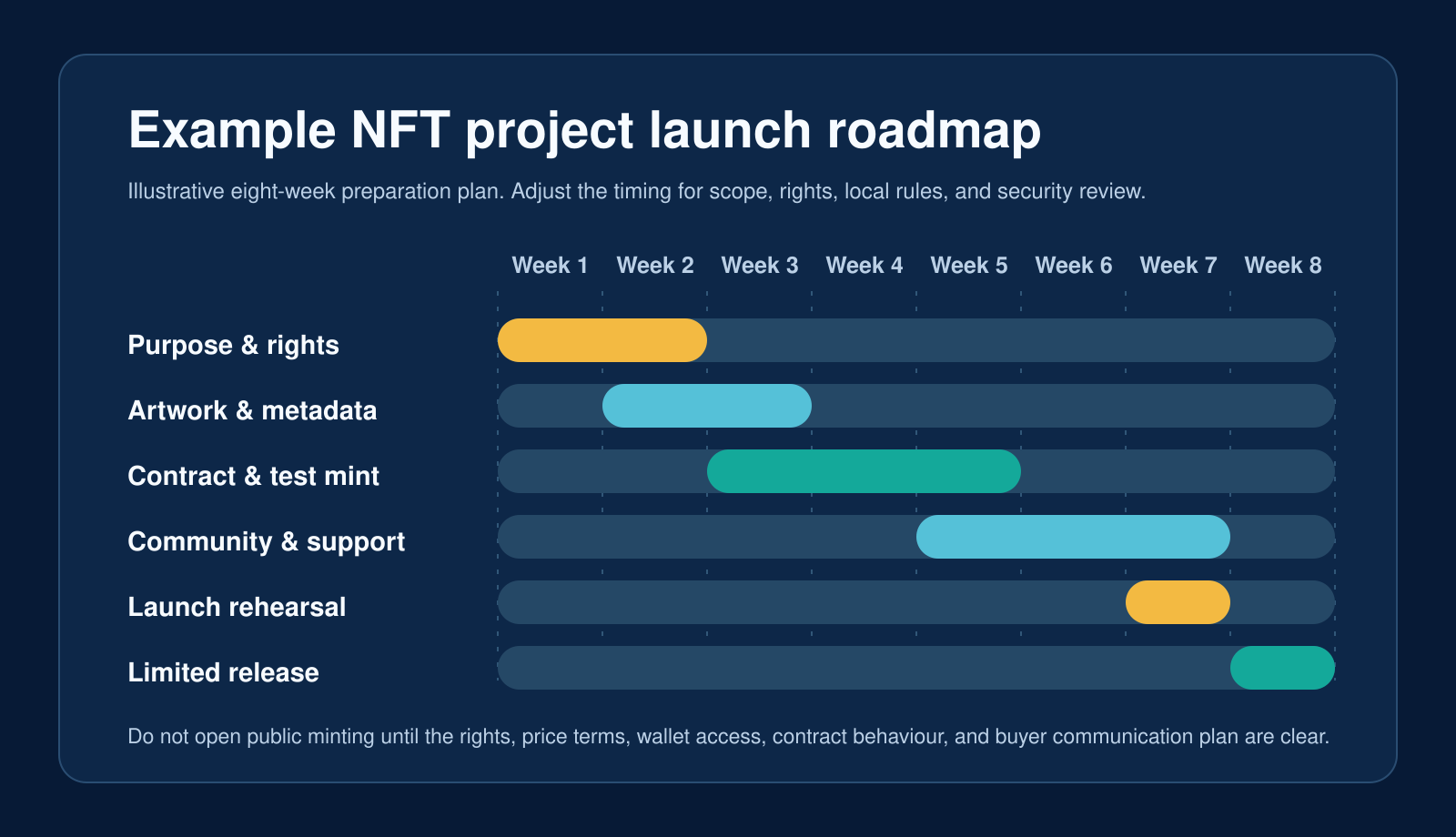
Before launch, run a short rehearsal with a small trusted group. Ask them whether the terms are understandable, the links are easy to verify, and the mint path works on mobile as well as desktop.
8. Handle launch day support and keep records
On launch day, monitor official channels, publish updates when something changes, and avoid making rushed technical changes without review. Keep invoices, wallet addresses, transaction hashes, contract versions, and marketplace records. These details can be important for accounting and for resolving buyer questions. See Crypto Tax Basics for general record keeping considerations, then consult a qualified local tax professional for your situation.
Before launch checklist
| Check | Question to answer before launch |
|---|---|
| Rights | Can you document ownership or permission for every creative asset? |
| Terms | Can a buyer understand what they receive and what they do not receive? |
| Testing | Has the full mint path been tested with a low value transaction? |
| Security | Are wallet, account, and team permissions documented and limited? |
| Costs | Are fees, taxes, and support costs included in a conservative budget? |
| Support | Is there a verified contact route and clear incident update process? |
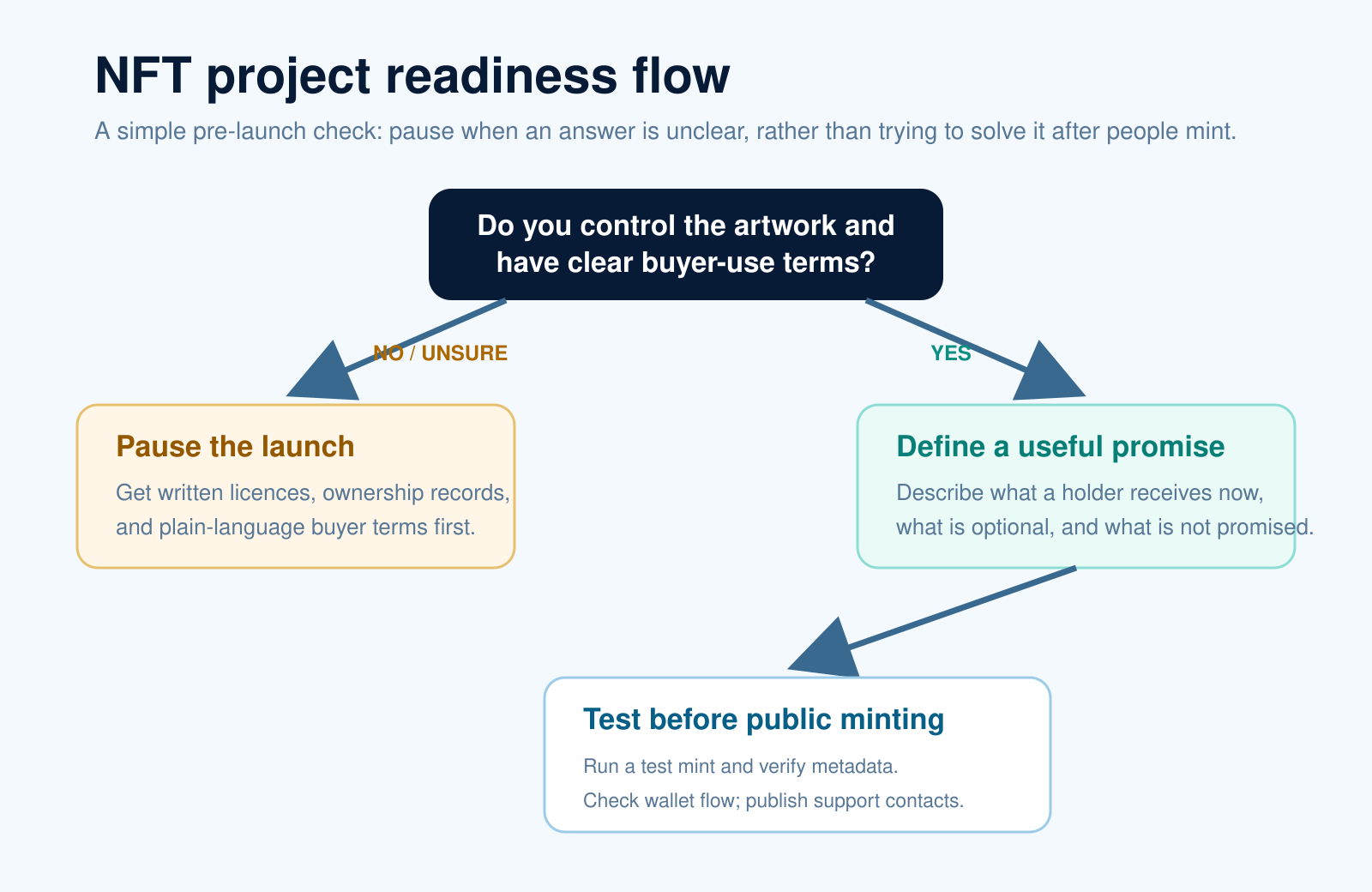
When to pause the launch
- You cannot prove rights to the artwork or brand assets.
- The buyer terms are vague, or the promised benefit is not ready.
- A test mint fails or users do not understand the wallet flow.
- Someone asks you to share a seed phrase or sign an unfamiliar transaction.
- Your launch plan relies on claims about future price, returns, or guaranteed demand.
Bottom line
A good NFT project starts with clarity, not hype. Define a useful and honest holder experience, document rights, select technology that fits the work, test before asking the public to mint, protect wallets, and plan post launch support. If you are still learning the foundations, start with What Is Cryptocurrency?, keep our scam safety guide close, and move forward only when your project can withstand careful questions.