
Crypto wallets explained without the scary jargon.
A crypto wallet is the tool you use to receive, store, and send digital assets. The important part is not the app logo. It is who controls the private keys, how recovery works, and what habits protect you from irreversible mistakes.
Quick summary
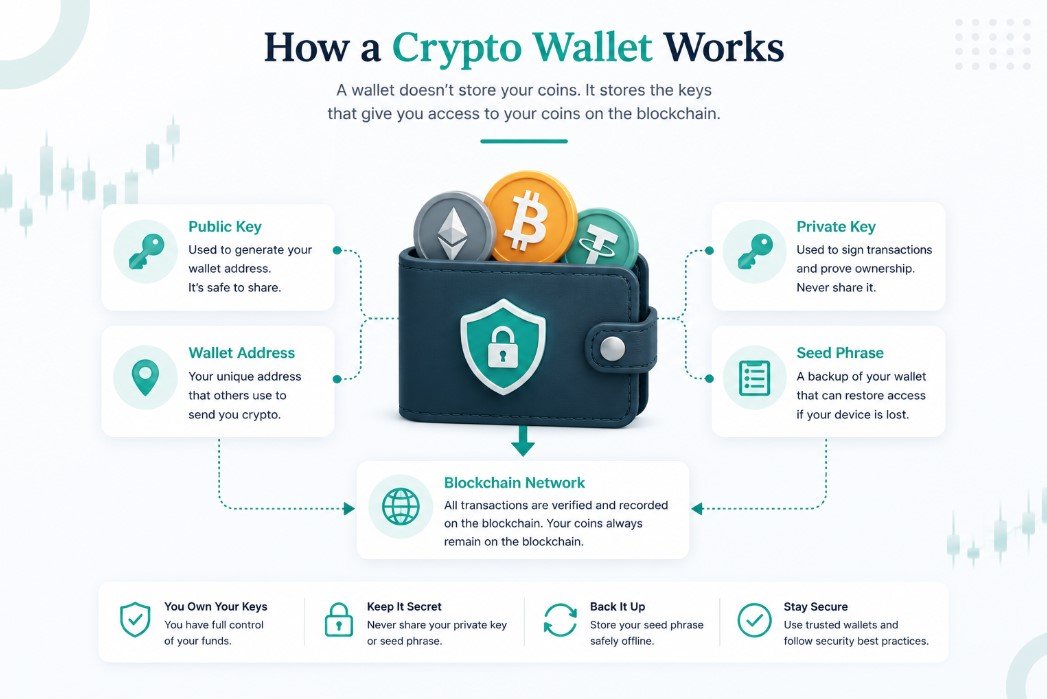
A crypto wallet does not usually hold coins inside the app like a physical wallet holds cash. Your coins live on the blockchain. The wallet stores or manages the keys that let you prove ownership and sign transactions.
The main wallet types
Different wallets solve different problems. A beginner might use an exchange account for the first purchase, a hot wallet for small transfers, and a hardware wallet for long term storage.
The exchange controls the wallet infrastructure. It is easier for beginners, but you rely on the platform and your account security.
A mobile or browser wallet connected to the internet. Useful for swaps, NFTs, DeFi, and small balances, but more exposed to phishing and device risk.
A physical device that keeps private keys offline. Better for long term holdings, but it requires careful backup and official purchase sources.
| Wallet route | Best for | Main risk | Beginner rule |
|---|---|---|---|
| Exchange account | First buys, fiat deposits, active trading | Platform risk, weak login security, withdrawal limits | Use app based 2FA and test withdrawals early. |
| Mobile wallet | Small everyday balances and simple transfers | Lost phone, fake apps, phishing links | Keep balances small until recovery is tested. |
| Browser wallet | dApps, DeFi, NFTs, test transactions | Malicious approvals, fake sites, risky signatures | Use a separate wallet for experiments. |
| Hardware wallet | Long term storage and larger holdings | Bad seed backup, fake reseller devices, user error | Buy officially and practice with a small amount first. |
Seed phrases and private keys
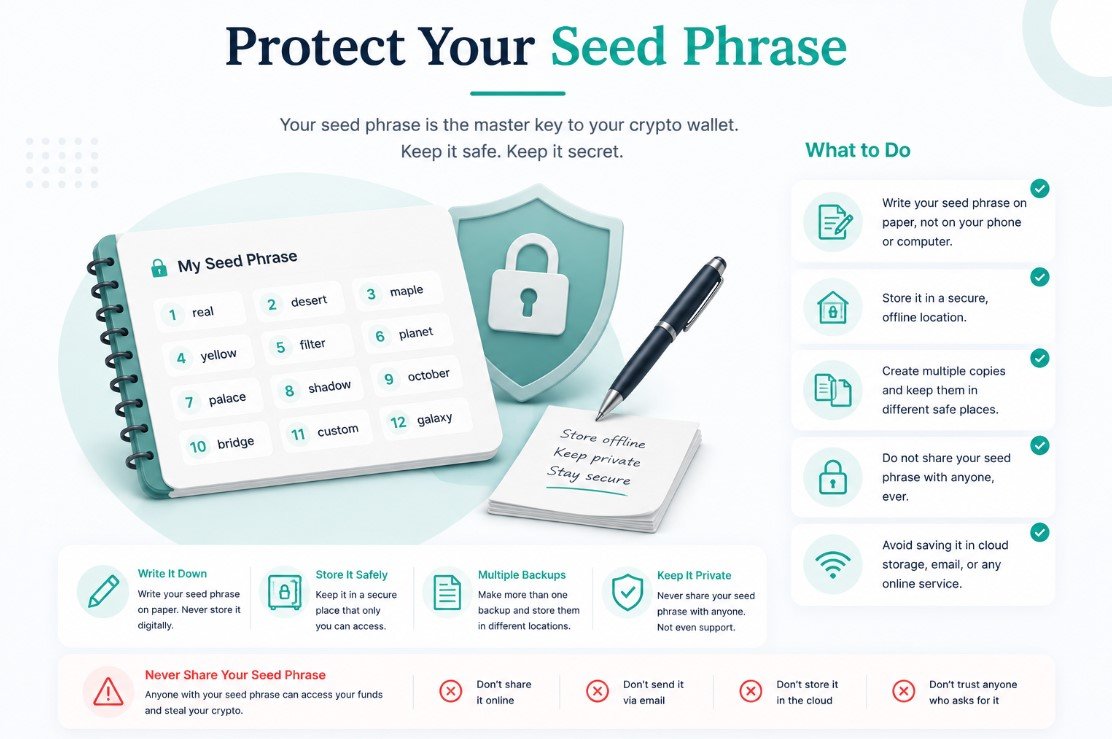
A seed phrase is a recovery backup for a wallet. If someone gets it, they can usually restore the wallet and move the funds. Real support teams, wallet apps, exchanges, or airdrop pages should never need your seed phrase.
Safer seed phrase habits
- Write the phrase offline and keep it away from cloud notes, screenshots, email, and chat apps.
- Store backups somewhere private, durable, and protected from water, fire, and casual discovery.
- Do not photograph the phrase, paste it into forms, or send it to anyone who claims to be support.
- Before storing serious value, learn how recovery works with a small test wallet.
A practical beginner setup
You do not need a complicated setup on day one. Start with a simple process and improve it as your balance and activity grow.
- Use a reputable exchange for the first purchase if you need bank or card access.
- Enable a unique password, app based 2FA, withdrawal allowlists, and anti phishing codes.
- Create a small self custody wallet and send a tiny test withdrawal first.
- Keep long term holdings separate from wallets used for swaps, airdrops, NFTs, or dApps.
- Use a hardware wallet when the amount becomes too important to expose to daily internet activity.
Transfer checklist before sending crypto
Crypto transfers can be irreversible. Most beginner mistakes are not technical. They are rushed checks: wrong network, copied address error, missing memo, fake app, or sending a large amount before testing.
- Confirm the receiving address from the actual wallet or exchange deposit screen.
- Match the network exactly, such as Bitcoin, Ethereum, Solana, Polygon, Base, Arbitrum, or BNB Chain.
- Check whether the receiving platform requires a memo, tag, or destination note.
- Send a small test amount first and wait until it appears correctly.
- Save the transaction hash, date, asset, amount, network, and purpose for your records.
Common wallet mistakes to avoid
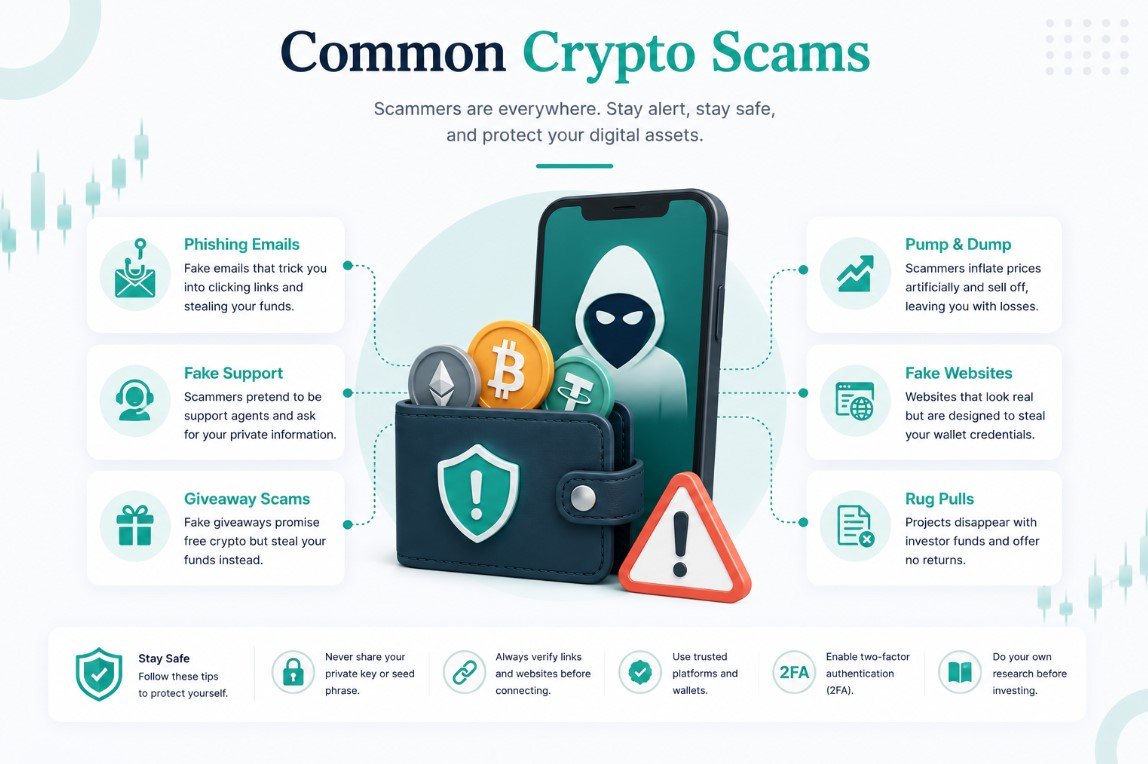
- Keeping every coin on one exchange without a withdrawal or custody plan.
- Using one browser wallet for long term storage and risky dApp experiments.
- Downloading wallet apps from search ads, direct messages, or unofficial links.
- Approving unlimited token permissions without understanding what the contract can spend.
- Ignoring gas fees and sending small transfers when the fee is larger than the value moved.
- Buying a hardware wallet from an unknown reseller instead of the official source.
Useful tools after choosing a wallet
Wallet decisions connect to buying, transfers, gas fees, staking, and taxes. These tools help you plan before money moves.
Wallet FAQ
Do I need a wallet if I only buy crypto on an exchange?
You can start on an exchange, but if you hold long term, you should learn self custody. An exchange account is convenient, but it is not the same as controlling your own wallet keys.
Is a hardware wallet worth it?
For larger or long term holdings, a hardware wallet can reduce online key exposure. It is only useful if you buy from official sources, back up the seed phrase safely, and understand transactions before signing.
Can I recover crypto sent to the wrong network?
Sometimes, but not always. It depends on the receiving platform, wallet support, and chain compatibility. The safer habit is to match the network and send a test transfer first.
Should I use one wallet or several wallets?
Several wallets are often safer. Use one for long term storage, one for daily transfers, and one small wallet for experimental dApps or higher risk activity.
What is the difference between a public address and a seed phrase?
A public address is like a receiving address you can share. A seed phrase is the private recovery backup that can control the wallet. Never share the seed phrase.
Final takeaway
A wallet is not just software. It is a responsibility system. Choose a wallet based on how much you hold, how often you transact, and how well you can protect recovery information. Start small, test everything, separate risky activity from storage, and never let urgency make decisions for you.
Keep learning about wallet safety
These related pages help connect wallet basics with real safety decisions.